







How ISO Certification helpful for Transport & Logistics?
Any economy's backbone is the transportation and logistics business. It is also one of the most notorious industries for creating irreversible environmental damage. As a result of ISO Certification for Transport and Logistics, these businesses can achieve a balance between development and environmental sustainability by standardising their systems and processes in accordance with internationally recognised and approved criteria.
Why do the Transport & Logistics need ISO Certification?
The transportation and logistics industries are among the most dangerous. As a result, there is considerable worry about the safety of transportation and logistical services. Only globally accepted criteria can ensure these industries' safety management. Now comes the requirement for ISO certification. An ISO brand assures clients that the transportation and logistics company's services meet internationally recognised standards.
The absolute necessity of ISO certification may be felt at each and every stage of the supply chain. The following are some considerations to consider in this regard:
- The ISO standards are most likely to improve the appropriateness of the functions carried out in the transportation and logistics industry.
- Custom ports and railroads can be linked using ISO standards.
- The ISO Certification assists you in establishing a bridge to international recognition.
- It assists you in demonstrating your dedication to customer satisfaction.
- The ISO certification aids in the systematisation of consignments by providing much more capability.
- As a result, ISO certification will ultimately assist you in smoothly entering worldwide markets!
Which standards or ISO certificates are required for the Transport & Logistics?
The International Organization for Standardization (ISO) develops standards that aid in the implementation of systematised management systems for the delivery of quality assured products and services, as well as enabling compliance with the relevant standard.
For the Transport & Logistics, there are a number of ISO standards. ISO 9001, ISO 14001, ISO 27001, and ISO 45001 are the most widely used ISO certifications in the Transport & Logistics. Let's take a closer look at these requirements:
Let's have a look at these ISO standards in more detail:
ISO 9001 Standard
ISO 9001 is a global standard that establishes a framework for establishing Quality Management Systems (QMS) in businesses. As a result, ISO 9001 assures that the quality of your products or services fulfils client expectations, which is extremely advantageous to the prosperity of your country.

ISO 14001 Standard
By providing the basis for the construction of Environmental Management Systems, the internationally renowned ISO 14001 standard assists you in enhancing your contact with the environment (EMS). It also aids you in resource management and waste reduction in order to make your activities more environmentally friendly.

ISO 45001 Standard
The global standard ISO 45001 provides a framework for building an occupational health and safety management system (OHSMS) in your company. This protects both your employees and your visitors from work-related injuries.
ISO 22301 Standard
The ISO 22301 standard specifies how to build Business Continuity Management Systems (BCMS) in your company. ISO 22301 Certification protects your organisation from any disruptions and lowers downtime by assuring quick recovery.
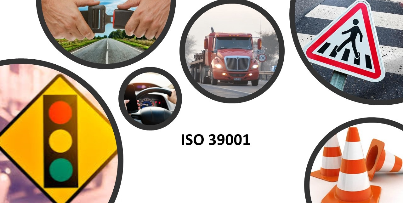
ISO 39001 Standard
The ISO 39001 standard aids in the implementation of your company's Road Traffic Safety Management System. ISO 39001 Certification aids in the management of road safety risks and the reduction of accidents and fatalities.
Benefits of ISO certification for Transport & Logistics Industry
Any economy's backbone is the transportation and logistics business. It is also one of the most well-known industries for creating irreversible environmental damage. As a result of ISO Certification, these industries can strike a balance between development and environmental sustainability by standardising their systems and processes in accordance with internationally recognised and accepted standards.
- It improves your reputation by exhibiting your dedication to reaching international standards.
- More systematic delivery of goods, enhancing your reputation and assisting you in attracting new customers and retaining existing ones.
- Due to better management, it enhances environmental performance and decreases security threats.
- Make your company capable of doing business on a global scale.
- Recognizing and controlling your company's existing and future risks.
- Take the appropriate steps to reduce the effect of occurrences.
- Demonstrate tenacity in the face of consumers, suppliers, and tender requests.
ISO Certification process for Transport & Logistics
- Application & contract
- Audit team Assignment
- Document view
- Certification Audit Independent review
- Notification of Certification
- Surveillance audit
- Re-Assessment
The certification process goes further. click here to view the next steps to ISO certification Process